Mittwoch, 17. August 2011

Consolidated Reply to Responses by SEC and Co.

August 17, 2011
By KACHROO LEGAL SERVICES, P.C.
No one has disputed in their oppositions that the Investor Committee lacks a majority of independent and disinterested investors, which is necessary to adequately represent the interests of investors. To the contrary, the Investor Committee admits that three of its non-investor attorney members have substantial contingency fee agreements with the Receiver, and that the non-investor Examiner is paid out of the receivership estate - resulting in a situation where four of the seven members are interested.

Additionally, a fifth member, an attorney, is not an investor. The Movants seek intervention based on the simple and uncontroversial principle that the Investor Committee should be comprised of at least a majority of disinterested investors.

The motion should be granted on this basis alone.

Rather than substantively address this concern and reassure investors that they are in fact adequately representing their interests, the Investor Committee prefers to attack Movants' counsel in a personal and, frankly, inaccurate character assassination, for which they should be ashamed. The fact that the Investor Committee is seeking to repel rather than welcome independent support and help is very telling.

To their credit, the SEC and the Receiver did not engage in personal attacks, but also did not address the principal concern: whether the receivership is adding value to the estate for investors.

One of the concerns raised by Movants in their motion was a 25% contingency fee agreement with attorneys on the Investor Committee (representing the receivership and essentially therefore all investors), that could generate hundreds of millions of dollars in attorneys' fees, in cases that the Receiver has already investigated and developed, and with no provision for judicial review or approval of the appropriateness of the fees in relation to the work performed...
FOR IMMEDIATE RELEASE! Source.


Visit the Stanford International Victims Group - SIVG official forum http://sivg.org/forum/

S.E.C. Files Were Illegally Destroyed, Lawyer Says

August 17, 2011
By EDWARD WYATT
An enforcement lawyer at the Securities and Exchange Commission says that the agency illegally destroyed files and documents related to thousands of early-stage investigations over the last 20 years, according to information released Wednesday by Congressional investigators.

The destroyed files comprise records of at least 9,000 preliminary inquiries into matters involving notorious individuals like Bernard L. Madoff, as well as several major Wall Street firms that later were the subject of scrutiny after the 2008 financial crisis, including Goldman Sachs, Lehman Brothers, Citigroup and Bank of America.

The S.E.C. is the very agency that is charged with making sure that Wall Street firms retain records of their own activities, and has brought numerous enforcement cases against firms for failing to do so.

The agency's records were routinely destroyed under an S.E.C. policy, since changed, that called for the disposal of records of a preliminary inquiry that was closed if it did not get upgraded to a formal investigation, according to Congressional records and people involved in inquiries into the matter. The agency believes that both the original policy and the new rules comply with federal document-retention laws.

John Nester, an S.E.C. spokesman, said that while the agency was not required to retain all documents, it changed its policy last year regarding destruction of files for "matters under investigation," the category of initial inquiry by the S.E.C.'s enforcement division that is the subject of the current scrutiny.

Changes were made to the S.E.C. policy after questions about the document destruction were raised in early 2010 by Darcy Flynn. Mr. Flynn, an employee of the S.E.C.'s enforcement division for 13 years, began a new job in January 2010 helping to manage the disposition of records for the division. Mr. Flynn, who continues to work at the S.E.C., has sought protection under federal whistle-blower laws.

The document disposal, which was first reported by Rolling Stone magazine on Wednesday, is the subject of inquiries by the Senate Judiciary Committee; the National Archives and Records Administration, which oversees laws governing federal agency records; and the inspector general of the S.E.C., according to the records and to people involved in the investigations.

In addition to whether the document disposal violated federal laws about government records, officials are concerned that the S.E.C. policy might have hindered later investigations into the same people or companies or covered up wrongdoing.

"These records may contain critical information that could be extremely useful in piecing together complex cases, even if not immediately pursued," Senator Charles E. Grassley, an Iowa Republican who is the ranking member on the Senate Judiciary Committee, wrote in a letter to the S.E.C. on Wednesday.

Mr. Nester declined to comment on Mr. Grassley's letter or on a letter to Mr. Grassley from a lawyer for Mr. Flynn that laid out the allegations in detail.

H. David Kotz, the S.E.C. inspector general, said that he was investigating the issue and hoped to complete a report by the end of September. A spokesman for the National Archives did not respond to requests for comment late Wednesday afternoon.

The National Archives wrote to the S.E.C. last year, saying that it "appears that there has been an unauthorized disposal of federal records," and asked for further information, according to Mr. Flynn's chronology.

Mr. Flynn said that S.E.C. officials discussed whether to lie about the document destruction because they might be open to criminal liability. Unlawful and willful destruction of federal records is punishable by up to three years in prison.

The S.E.C. replied to the National Archives in a letter, saying that it was "not aware of any specific instances of the destruction of records" that should have been retained. It added that it "cannot say with certainty that no such documents have been destroyed over the past seventeen years."

The letter from Mr. Flynn's lawyer said that the old document destruction policy gave S.E.C. officials assurance that if they closed an inquiry without upgrading it to a formal investigation, there would be no record of their actions.

It is common for S.E.C. employees to leave the agency for the private sector and then begin representing clients before the agency. Mr. Flynn contends that the practice increases the likelihood that S.E.C. investigators could do undetected favors for former colleagues and their clients by quashing investigations.

Whether that revolving door led to the closing of an investigation in 2001 involving Deutsche Bank and the destruction of the files is part of the investigation by the S.E.C.'s inspector general.


Visit the Stanford International Victims Group - SIVG official forum http://sivg.org/forum/

Mittwoch, 3. August 2011

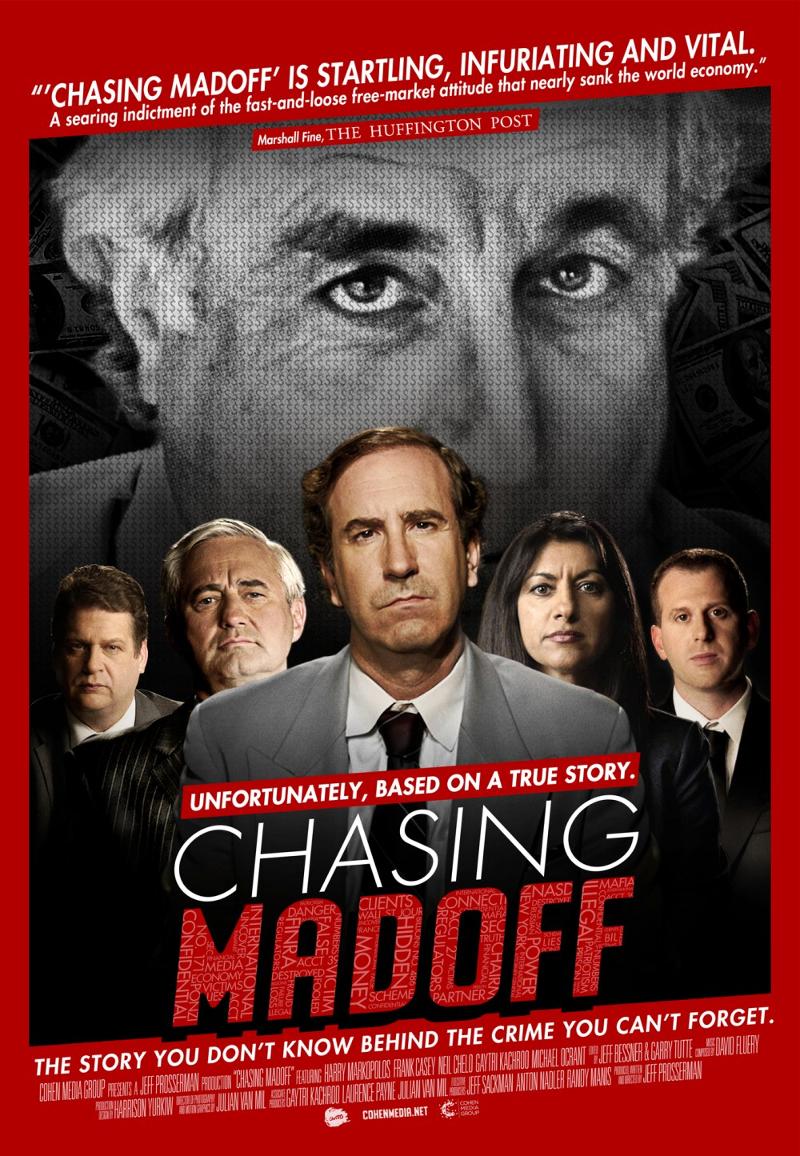
Chasing Madoff

August 03, 2011
By Kachroo Legal Services, P.C.
"KLS is proud to present the Fox Hounds' documentary feature film to be released in the US in late August, 2011. Please check it out at a theatre near you. It is a substantive and educational review of Wall Street, underscoring the profound need for financial reform and ethics in global finance. Dr. Gaytri Kachroo, a member of the Markopolos team, is a subject and co-producer of the film."
Chasing Madoff opened Friday in New York.

Ex-McCarter Lawyer a Key Figure in New Madoff Film
Posted by Brian Baxter
Two years ago Gaytri Kachroo was chair of McCarter & English's international practice. She resigned from the firm in July 2009 as a result of conflicts related to several cases she was pursing on her own probing the $20 billion Ponzi scheme perpartrated by Bernard Madoff.

Now, Kachroo can be seen on film relentlessly pursuing that goal in Chasing Madoff, a documentary about Harry Markopolos and his team, known as the Fox Hounds, and their quest to get someone, anyone, to listen to Markopolos's long-held concerns about Bernard L. Madoff Investment Securities.

Kachroo, who serves as an associate producer on the film, began working with Markopolos in 2005 after the two met at a meeting hosted by the U.S. Chamber of Commerce in Cambridge, Mass. The meeting came around the same time that Markopolos, a former options trader turned financial fraud investigator, wrote a 19-page memo to the SEC titled "The World's Largest Hedge Fund is a Fraud."

Kachroo soon joined the Fox Hound team assembled by Markopolos. Other members of the self-appointed financial truth squad—which collected evidence on the Madoff enterprise and used it to implore the SEC to implement necessary regulatory changes—include research analyst Neil Chelo, hedge fund manager Frank Casey, and former financial journalist Michael Ocrant.

Since joining the Markopolos team, Kachroo has helped prepare the whistle-blower for testimony before Congress, advised the Fox Hound on a report compiled by the SEC inspector general that recommended revisions to the regulator's mandate and the adoption of new whistle-blower protections, and brokered book and movie deals for Markopolos. The book and movie rights were not very lucrative, Markopolos told The New York Times, but brought much-needed attention to the issue of regulatory reform and whistle-blower rights.

In October 2009, Kachroo opened her own firm, Boston-based Kachroo Legal Services, where she employs three attorneys, one of whom is John Ray III, a former senior litigation associate at Ropes & Gray now suing the firm for discrimination.

Kachroo currently represents dozens of Madoff victims in lawsuits seeking compensation for investment losses and also serves as vice chair of a global alliance of 50 law firms representing former Madoff investors. She also represents a group of clients seeking to be reimbursed for investments made with R. Allen Stanford, another former financier alleged to have run a $7 billion Ponzi scheme.

Source: http://sivg.org/article/Chasing_Madoff.html


Visit the Stanford International Victims Group - SIVG official forum http://sivg.org/forum/
Samstag, 30. Juli 2011

Response and Objection to the KLS Motion to Intervene

July 30, 2011
The Motion to Intervene filed by the KLS Stanford Victims should be denied. While styled as a Motion to Intervene (and for the appointement of four additional Stanford investors to the Committee), the Motion is little more than an attempt by one lawyer - Gaytri Kachroo ("Kachroo") - to belatedly insert herself into these proceedings, principally in order to influence defrauded Stanford investors to hire her firm to sue the United States government, but also in an effort to circumvent prior orders of this Court which established and govern the conduct of the Committee.

The Motion should be denied for at least each of the following reasons (any one of which would alone support denial):

A. This Court has uniformly denied all of the numerous previous requests (during this two-and-a-half-year old case) by individual Stanford investors, and groups of investors, to intervene, and instead determined to appoint the Examiner and the Committee to represent the interests of investors in these proceedings, all through carefully crafted orders entered after notice and an opportunity to be heard by Movants and all other Stanford investors and their representatives. Neither Kachroo nor any member of the KLS Group (nor any other Stanford investor for that matter) filed any objections to, or appeals from, any of the relevant orders about which she now belatedly complains, but all of which became final and non-appealable long ago. In fact, no investors filed objections to entry of any of the orders which established the Committee, entrusted it with broad powers to investigate and prosecute claims on behalf of investors and the Receivership estates, and named the Examiner;

B. Even considering Kachroo's request for appointment of her firm's clients to the Committee would be premature and inappropriate unless this Court were to reverse its previous practice and grant her intervention motion;

C. Granting the Motion and/or other motions to intervene at this stage of the proceedings would create chaos, delay and increase the costs of administering these cases;

D. The requested intervention would be futile because the alleged and limited grounds for which the intervention is purportedly sought have either been addressed already, or would be unaffected by the requested intervention;

E. The putative intervenors, all of whom appear to be Stanford investors, are already fully and adequately represented in these proceedings; and

F. The requested intervention is untimely.

The request by Kachroo Legal Services, P.C. to initiate an investigation attached the recently filed Motion to Intervene and Declaration based on the malfeasance and waste of the receivership which to date has consumed all collected assets, $120 million. The motion also details an inside deal between the Receiver and the Official Stanford Investor Committee which provided a pre-approved 25% percent contingency fee to attorneys on the Committee who have not objected to any of the Receiver's fees. This is despite their role of holding the receivership accountable and on track and their right to raise and be heard on any issue in the Receivership proceedings.


FOR IMMEDIATE RELEASE! Source.


Visit the Stanford International Victims Group - SIVG official forum http://sivg.org/forum/

Donnerstag, 21. Juli 2011

SEC Inspector General to Investigate Stanford Texas Receivership

July 21, 2011
By KACHROO LEGAL SERVICES, P.C.
We have learned today that SEC Inspector General David Kotz will begin an investigation of the Texas Receivership of Allen Stanford, pursuant to a request by Kachroo Legal Services, P.C.

The request by Kachroo Legal Services, P.C. to initiate an investigation attached the recently filed Motion to Intervene and Declaration based on the malfeasance and waste of the receivership which to date has consumed all collected assets, $120 million. The motion also details an inside deal between the Receiver and the Official Stanford Investor Committee which provided a pre-approved 25% percent contingency fee to attorneys on the Committee who have not objected to any of the Receiver's fees. This is despite their role of holding the receivership accountable and on track and their right to raise and be heard on any issue in the Receivership proceedings.

The Inspector General will likely investigate the SEC's failure to appropriately oversee this Receivership. The last objection concerning overbilling by the Receiver Ralph Janvey filed by the SEC was over one and one-half years ago.

For further information please contact Kachroo Legal Services, P.C. at (617) 864-0755 or email wlugo@kachroolegal.com. For further information about Kachroo Legal Services, P.C., please review our website www.kachroolegal.com.


FOR IMMEDIATE RELEASE! Source.


Visit the Stanford International Victims Group - SIVG official forum http://sivg.org/forum/

Freitag, 8. Juli 2011

Stanford Victims Complain About Receiver's Spending

Janvey Overspending July 8, 2011

A motion has been filed in the US District court to protect Stanford Victims from what they view as the overspending by the court-appointed receiver and the negligence of the Stanford Investor Committee.

Acting on their behalf, Kachroo Legal Services, PC has filed a motion to intervene, and for appointment to the Committee.

The motion said KLS Stanford Victims are "dissatisfied with the actions and omissions of the Receiver and believe their interests are not adequately represented in the receivership."

It also said the receiver has failed in his directive to "minimize expenses in furtherance of maximum and timely disbursement thereof to claimants," as ordered by the court.
Investors state that Ralph Janvey has taken all US$120 million of the assets thus far collected by him and already existing in the estate.
A release from the Victims' group is reprinted here, along with a copy of the motion.

Source.
Stanford victims say they're being defrauded again
A motion filed on behalf of the investors who lost money in Allen Stanford's alleged Ponzi scheme two years ago claims the man overseeing the recovery of assets is using up the money instead of helping the victims.

They say that since the US Securities and Exchange Commission (SEC) shut down Stanford's investing and banking operations in 2009 the money collected, which were intended to help them recover their losses, has mostly been used to pay expenses.

According to the motion filed yesterday by Kachroo Legal Services, P.C. and its principal, Gaytri Kachroo, out of the US$7 billion which investors were allegedly defrauded out of through the sale of certificates by the Antigua-based Stanford International Bank (SIB), court-appointed receiver Ralph Janvey has collected – minus expenses – US$1.5 million.

"Whereas, through January 2011 the receivership estate has paid out a massive US$118.2 million in expenses, but none to the investors. As a result, there remains only US$1.5 million for the Stanford victims from the efforts of the receiver. This equates to US$71.42 per investor, but even this small amount will likely be consumed by the receiver," the Stanford International Victims Group said in a statement issued after the motion was filed.

"It is clear that the receiver has not added any substantial value to the estate, and failed in his directive."

In the motion, led by Catherine Burnell of Antigua and the U.K., Ursula Mesa of Florida and Peru, Marcelo Avila of Ecuador, and Steven Graham of Louisiana - representative of the international breadth of investment into the alleged Ponzi scheme - investors state that Janvey has taken all US$120 million of the assets thus far collected by him and already existing in the estate.

The investors also claim that the attorneys who were installed on the Stanford Investors Committee which is responsible for holding the receiver accountable, had struck a deal to make themselves a preapproved 25 percent on all the fraudulent conveyance cases launched by the receivership.

The Committee was set up in August last year, after a judge granted a request by the victims, to look out for the investors' interest and give them a say in the recovery of assets.

However, the investors say "no party to the receivership is acting as a check on the excessive fees and expenses compared to the minimal recovery, challenging the contingency fee arrangement, the operation of the receivership, and otherwise voicing concern over the ineffectiveness of this receivership".

Janvey has not yet responded to the allegations.


Visit the Stanford International Victims Group - SIVG official forum http://sivg.org/forum/

Stanford Victims Refuse to be defrauded by Texas Receiver

July 8, 2011
Released by Kate Freeman
Since the SEC shut down Allen Stanford's investing and banking operations over two years ago, the receivership to help the victims recover their losses has been consuming all the assets, reveals a motion filed today by Kachroo Legal Services, P.C. and its principal, Gaytri Kachroo.

Out of a $7 billion Ponzi scheme, the receiver has collected, net of expenses just $1.5m. Whereas through January 2011 the receivership estate has paid out a massive $118.2m in expenses – but none to the investors. As a result, there remains only $1.5 million for the Stanford victims from the efforts of the Receiver, this equates to $71.42 per investor, but even this small amount will likely be consumed by the Receiver. It is clear that the Receiver has not added any substantial value to the estate, and failed in his directive.

The Stanford Investors Committee (FIC) attorneys have substantial interests in the fees they generate through contingency actions. Almost no party to this action sits completely independent of and disinterested in the assets that are recovered in this receivership. And when those assets are scarce, as in this case, their interest is sharply at odds with that of the investors.

In the motion, led by Catherine Burnell of Antigua and the U.K., Ursula Mesa of Florida and Peru, Marcelo Avila of Ecuador, and Steven Graham of Louisiana - representative of the international breadth of investment into this alleged Ponzi scheme of some $7 billion - investors state that the Receiver has taken all $120 million of the assets thus far collected by him and already existing in the estate. What is more, the attorneys who were installed on the Stanford Investor Committee and responsible for holding the Receiver accountable had in fact done a deal to make themselves a preapproved 25% on all the fraudulent conveyance cases launched by the Receivership!

To date little objection has been filed against the receivership, and finally the KLS group of investors have voiced the dissatisfaction of thousands of investors with the current Texas receiver, Janvey and the Stanford Investor Committee appointed by the courts. No party to the receivership is acting as a check on the excessive fees and expenses compared to the minimal recovery, challenging the contingency fee arrangement, the operation of the receivership and otherwise voicing concern over the ineffectiveness of this receivership. The only person objecting is Alan Stanford — the person who allegedly committed the fraud.

The motion was filed on the heels of a change in the Antiguan liquidation, which had come under similar complaint and attack and lead to the removal of the previous receivers and their substitution by Grant Thornton.
KLS STANFORD VICTIMS' MOTION TO INTERVENE AND FOR APPOINTMENT TO THE OFFICIAL STANFORD INVESTOR COMMITTEE
Movants file this motion to intervene in this proceeding and for appointment to the Committee on behalf of themselves and as representatives for investors with over 500 Stanford accounts that are part of the receivership (the "KLS Stanford Victims").

The payments provided to attorneys and the Receiver in this case do not appear to reflect any reasonable compensation for the services provided nor appear in the best interest of the receivership or the victims, upon whose behalf the receivership should benefit. Moreover, the Receiver's contingency agreements with the attorneys on the Committee create a substantial and disabling self-interest that precludes adequate, independent representation of the investors by the Committee and in this proceeding.
DECLARATION OF DR. GAYTRI D. KACHROO
In connection with the Motion to Intervene, KLS diligently reviewed the filings in this action, and other actions taken on behalf of the receivership, including the fee applications and reports by the Receiver. It appears on the basis of the pleadings and documents in this action, that the receiver has failed in his directive to "minimize expenses in furtherance of maximum and timely disbursement thereof to claimants," as ordered by the Court. The payments provided to attorneys, consultants and the Receiver in this case do not appear to reflect any reasonable compensation for the services provided nor appear in the best interests of the receivership or the victims.

The issues of the exorbitant fees and the operation of the estate, which have drained substantial recovered assets, do not appear to be adequately raised or addressed by the Official Stanford Investor Committee nor any other party to this proceeding.

As part of the Official Stanford Investor Committee, the Movants would raise these and other related issues to adequately represent the interests of Stanford investors worldwide.


Visit the Stanford International Victims Group - SIVG official forum http://sivg.org/forum/

Montag, 20. Juni 2011

Securities: SEC concludes Stanford is guilty

June 20, 2011
Sir Allen Stanford has not been convicted of any offence. Nor have any regulatory proceedings been concluded against him. Yet the USA's Securities and Exchange Commission has decided that he ran a Ponzi scheme and that "investors" are entitled to certain statutory protections.

A statement issued by the SEC on 15th June says "The Securities and Exchange Commission today concluded that certain individuals who invested money through the Stanford Group Company – a U.S. broker-dealer owned and used by Allen Stanford to perpetrate a massive Ponzi scheme – are entitled to the protections of the Securities Investor Protection Act of 1970 (SIPA)."

The commission does not, in fact, appear to have concluded any formal inquiry. Instead it appears to be relying on a report by a Court Appointed Receiver for the Stanford Group Company that there were a number of companies which "were operated in a highly interconnected fashion, with a core objective of selling" the CDs.

Among other things, the receiver also says that "[c]orporate separateness was not respected within the Stanford empire. ...Money was transferred from entity to entity as needed, irrespective of legitimate business need. Ultimately, all of the fund transfers supported the Ponzi scheme in one way or another, or benefited Allen Stanford personally."

It is the finality of the wording that causes concern: "the" features strongly, juxtaposed with "Ponzi scheme."

The SEC does - almost - recognise that there has been no finding in any court of competent jurisdiction that there was in fact a Ponzi scheme: indeed, the best it can do is to refer to its early filings: "According to its 2009 complaint, the SEC alleged that Allen Stanford operated a Ponzi scheme in which certain investors were sold certificates of deposit (CDs) issued by Stanford International Bank Ltd. (SIBL) through the Stanford Group Company (SGC). SGC is a SIPC Member."

This is nothing more than an attempt to use its own earlier filings to bolster its current statements. The analysis upon which the SEC bases its current statements can be found (pdf) at http://sivg.org/article/SEC_protection_SIPA.html

The fact remains that Stanford remains not guilty and not subject to any formal finding of impropriety within the regulatory regime. The SEC's actions and the wording it has adopted are tainting the jury pool for the eventual criminal trial, and producing a background which prosecutors will be able to use to great prejudicial effect.

Of course, if there was a ponzi scheme (and that remains uncertain although there are sufficient grounds for suspicion of some kind of impropriety), then victims should be able to use the full weight of the law to protect themselves against loss. But the other side of the coin is that Stanford is entitled to a clean run at a defence.

The SEC, by its choice of language, is seriously undermining that entitlement.


Visit the Stanford International Victims Group - SIVG official forum http://sivg.org/forum/

Compensating Stanford's Investors

Stanford June 20, 2011

The Securities and Exchange Commission froze the assets of R. Allen Stanford's financial empire almost two years ago. But authorities are still figuring out whether investors can get compensated for some of their losses.

The S.E.C. is pushing for investors who bought more than $7.2 billion in allegedly bogus certificates of deposit from Mr. Stanford's Antiguan bank to be treated as brokerage customers by the Securities Investor Protection Corporation. If that happens, clients could get at least some of their money back.
Richard Carson/Reuters
R. Allen Stanford arrives at a federal court in August 2010 for a hearing in his alleged fraud case.
SIPC provides a measure of protection for customers when a broker becomes insolvent, paying up to $500,000 per customer that includes $250,000 in cash. The program, which is not intended to provide insurance against fraud, only covers the brokerage firm's customers and not those who dealt with an affiliate, like an offshore bank, that is not qualified to participate in the program.

Mr. Stanford's financial empire included a brokerage firm, called the Stanford Group Company, which promoted the C.D.'s to investors by promising above-market returns. The actual issuer of the C.D.'s, however, was his Antiguan bank, Stanford International Bank. The entity was not a broker-dealer and so it fell outside of the protections afforded by SIPC.
White Collar Watch

In a letter sent in August 2009 to the trustee appointed to gather assets for Mr. Stanford's investors, SIPC denied that it was required to provide any coverage because the C.D.'s were bought from the offshore bank, even though the brokerage arm marketed them. The agency explained that the Stanford Group Company was merely an "introducing" broker that was not responsible for maintaining any securities on behalf of customers. As such, the agency was not responsible when the Antiguan bank collapsed and the C.D.'s became worthless.

The S.E.C. took a different position last week. In an analysis of the case, the S.E.C. told SIPC that it was putting form over substance by focusing solely on which of the various entities controlled by Mr. Stanford had issued the C.D.'s. Under the S.E.C.'s rationale, Mr. Stanford ignored those legal niceties and treated the various companies as one source of money for his alleged Ponzi scheme, taking money from each as if it were his personal piggy bank. "Credible evidence shows that Stanford structured the various entities in his financial empire," according the S.E.C. "for the principal, if not sole, purpose of carrying out a single fraudulent Ponzi scheme."

The S.E.C. asserted in its analysis that SIPC should cover investors. In effect, the agency said Mr. Stanford effectively stole from customers of the brokerage firm by selling worthless C.D.'s, much like the Ponzi scheme perpetrated by Bernard L. Madoff in which fictitious securities totaling $64 billion were credited to client accounts when it collapsed.

But the S.E.C. also makes it clear that any calculation of victim claims should not be based on the purported value of the C.D.'s reflected on the account statements provided by Stanford International Bank, but instead only the actual amount invested. Not surprisingly, this is the same position taken by the trustee appointed to liquidate Mr. Madoff's firm, Irving H. Picard, and SIPC in dealing with investors in that Ponzi scheme.

The S.E.C. urged SIPC to initiate a liquidation proceeding like the one undertaken by Mr. Picard, including the appointment of a trustee to weigh claims from investors. This is more than just a request, however, because the S.E.C. has supervisory authority over SIPC. The last line of its analysis was a rather unsubtle hint to compensate investors:

"In a further exercise of its discretion, the Commission has authorized its staff to file in district court an application under Section 11(b) of [Securities Investor Protection Act] to compel SIPC to initiate a liquidation proceeding in the event SIPC refuses to do so."

If SIPC does liquidate Mr. Stanford's brokerage operation, not all investors may benefit, as some victims of Mr. Madoff are discovering.

Mr. Picard successfully argued in the federal bankruptcy court that those who withdrew more from their accounts with Mr. Madoff than they invested – the so-called "net winners" – are subject to clawback suits to repay their profits and have no claim for losses. The "net winners" issue was argued before the United States Court of Appeals for the Second Circuit in March, and a decision is likely to come in the near future.

It is not clear whether there were any "net winners" among Mr. Stanford's investors. But there is a good possibility that some investors closed their accounts and took profits before the scheme collapsed. Any investors who profited on the C.D.'s from the Antiguan bank could face a similar situation to the "net winners" targeted by Mr. Picard.

I expect there to be similar clawback suits filed if SIPC does accede to the S.E.C.'s request. Given how contentious the Mr. Picard's lawsuits against "net winners" have been, we can expect more of the same if SIPC liquidates Mr. Stanford's brokerage firm.

The S.E.C.'s announcement had another salutary effect. Just a day before it issued its analysis, Senator David Vitter, Republican of Louisiana, placed a hold on the nominations of two commissioners to the S.E.C. until it announced its position on whether the investors were protected by SIPC.

The hold on the nominations has been removed, and everyone – except perhaps SIPC – is a bit happier. But when Mr. Stanford's investors will receive some compensation for their losses is still unclear because a liquidation is only the start of the process, as the Madoff case shows.


Visit the Stanford International Victims Group - SIVG official forum http://sivg.org/forum/

Freitag, 17. Juni 2011

SIPC ISSUES WARNING ON "PHISHING" SCAM TARGETING INVESTMENT SCAM VICTIMS

June 17, 2011
The Securities Investor Protection Corporation (SIPC), which maintains a special reserve fund mandated by Congress to protect the customers of insolvent brokerage firms, issued a warning today to consumers who are contacted by individuals falsely claiming to represent SIPC when asking for personal information or payments in order to return funds lost in investment scams.

SIPC officials said they have been contacted by several individuals alerting them to this scam, some of whom have lost money in the past to investment scams or were contacted by promoters of such schemes and then declined to invest.

In cases where an individual had lost money in the past to a fraudulent investment, they were contacted by email or phone and asked to pay a fee up-front to recover their lost money. Within a few weeks of declining to pay the fee, they are contacted by someone claiming to be from SIPC saying they have seized the assets of the company that defrauded them and wish to return the money to investors. The phony "SIPC agent" requests that the individual fill out a form with personal information and send it back.

SIPC President Stephen Harbeck reiterated: "When the liquidation of a brokerage firm is handled by SIPC, investors with missing stocks or cash do not pay a fee for recovery of those assets. Any individuals contacted by supposed representatives of SIPC who request an upfront fee or personal information should be extremely wary."

For more information, contact SIPC at asksipc@sipc.org or (202) 371-8300.

SIPC said that it has referred this scheme to the proper authorities for investigation.

ABOUT SIPC

The Securities Investor Protection Corporation is the U.S. investor's first line of defense in the event a brokerage firm fails, owing customers cash and securities that are missing from customer accounts. SIPC either acts as trustee or works with an independent court-appointed trustee in a brokerage insolvency case to recover funds.

The statute that created SIPC provides that customers of a failed brokerage firm receive all non-negotiable securities - such as stocks or bonds -- that are already registered in their names or in the process of being registered. At the same time, funds from the SIPC reserve are available to satisfy the remaining claims for customer cash and/or securities held with the broker for up to a maximum of $500,000 per customer. This figure includes a maximum of $250,000 on claims for cash. From the time Congress created it in 1970 through December 2010, SIPC has advanced $ 1.6 billion in order to make possible the recovery of $ 109.3 billion in assets for an estimated 739,000 investors.

MEDIA CONTACT: Ailis Aaron Wolf, (703) 276-3265 or aawolf@hastingsgroup.com.
All investor inquiries of SIPC should be directed to asksipc@sipc.org or (202) 371-8300.
This information was sent by Lucy Komisar LK@lucykomisar.com | http://thekomisarscoop.com/


Visit the Stanford International Victims Group - SIVG official forum http://sivg.org/forum/

Mittwoch, 15. Juni 2011

SEC Concludes That Certain Stanford Ponzi Scheme Investors Are Entitled to Protections of SIPA

June 15, 2011
Washington, D.C.
The Securities and Exchange Commission today concluded that certain individuals who invested money through the Stanford Group Company – a U.S. broker-dealer owned and used by Allen Stanford to perpetrate a massive Ponzi scheme – are entitled to the protections of the Securities Investor Protection Act of 1970 (SIPA).

In exercising its discretionary authority under SIPA and based on the totality of the facts and circumstances of the case, the Commission asked the Securities Investor Protection Corporation (SIPC) to initiate a court proceeding under SIPA to liquidate the broker-dealer.

According to its 2009 complaint, the SEC alleged that Allen Stanford operated a Ponzi scheme in which certain investors were sold certificates of deposit (CDs) issued by Stanford International Bank Ltd. (SIBL) through the Stanford Group Company (SGC). SGC is a SIPC Member.

In an analysis provided to SIPC, the SEC explains that, on the specific facts of this case, investors with brokerage accounts at SGC who purchased the CDs through the broker-dealer qualify for protected "customer" status under SIPA.

In reaching its determination, the SEC cited the conclusions in the report of the court appointed-receiver for SGC, who noted that the many companies controlled and directly or indirectly owned by Stanford "were operated in a highly interconnected fashion, with a core objective of selling" the CDs.

Among other things, the receiver also noted that "[c]orporate separateness was not respected within the Stanford empire. ... Money was transferred from entity to entity as needed, irrespective of legitimate business need. Ultimately, all of the fund transfers supported the Ponzi scheme in one way or another, or benefitted Allen Stanford personally."

The Commission further determined that, in light of all of the facts and circumstances in this case, the customers' claims should be based on their net investment in the fraudulent CDs used to carry out the Ponzi scheme.

A SIPA liquidation proceeding would allow investors with accounts at SGC to file claims with a trustee selected by SIPC. The trustee would decide whether the investors have "customer" claims that are protected by the statute. An investor who disagreed with the trustee's determination could seek court review.

The Commission has authorized its staff to file an action in federal district court under SIPA to compel SIPC to initiate a liquidation proceeding in the event SIPC does not do so.
SIPC TO REVIEW SEC DIRECTION ON STANFORD LIQUIDATION
The Securities Investor Protection Corporation ("SIPC"), which maintains a special reserve fund mandated by Congress to protect the customers of insolvent brokerage firms, said that it will analyze the referral provided today by the U.S. Securities and Exchange Commission ("SEC") with respect to the Stanford Group Company, operated by Robert Allen Stanford.

On February 17, 2009, the SEC filed an action in the U.S. District Court for the Northern District of Texas alleging that Stanford orchestrated an $8 billion fraud based on false promises of guaranteed returns related to certificates of deposit ("CDs") issued by the Antiguan-based Stanford International Bank ("SIB"). The SEC's Complaint alleged that SIB sold approximately $7.2 billion of CDs to investors by promising returns that were "improbable, if not impossible." Complaint, SEC v. Stanford International Bank, Ltd., et al., Case No. 3-09CV0298-L (N.D. Tex. filed February 17, 2009).

In response to the SEC's request for emergency relief, the Court immediately issued a temporary restraining order, froze the defendants' assets, and appointed a receiver to marshal those assets. The SEC filed a second amended complaint on June 19, 2009, alleging that Stanford conducted a Ponzi scheme.

SIPC President and CEO Stephen Harbeck said that SIPC would take the SEC's referral in the Stanford case under advisement before deciding how to proceed. He indicated that a decision would be forthcoming in the near future.

Harbeck said: "SIPC's Board will review the referral, and analyze the SEC's underlying documentation as quickly as possible."

The SEC's referral of this matter this week is the first time the SEC has informed SIPC of the possibility that the Stanford matter is appropriate for a proceeding under the Securities Investor Protection Act ("SIPA").

ABOUT SIPC

The Securities Investor Protection Corporation is the U.S. investor's first line of defense in the event a brokerage firm fails, owing customers cash and securities that are missing from customer accounts. SIPC either acts as trustee or works with an independent court-appointed trustee in a brokerage insolvency case to recover funds.

The statute that created SIPC provides that customers of a failed brokerage firm receive all non-negotiable securities - such as stocks or bonds -- that are already registered in their names or in the process of being registered. At the same time, funds from the SIPC reserve are available to satisfy the remaining claims for customer cash and/or securities custodied with the broker for up to a maximum of $500,000 per customer. This figure includes a maximum of $250,000 on claims for cash. From the time Congress created it in 1970 through December 2010, SIPC has advanced $ 1.6 billion in order to make possible the recovery of $ 109.3 billion in assets for an estimated 739,000 investors.

MEDIA CONTACT:

Ailis Aaron Wolf, (703) 276-3265 or aawolf@hastingsgroup.com. All investor inquiries of SIPC should be directed to asksipc@sipc.org or (202) 371-8300.


Visit the Stanford International Victims Group - SIVG official forum http://sivg.org/forum/

Dienstag, 14. Juni 2011

Block SEC Nominees Until Stanford Victims Get Answers

June 14, 2011
(Washington, D.C.) – U.S. Sen. David Vitter today announced that he will block the nominations of two Securities and Exchange Commission members until the SEC responds to a request by victims of the alleged Stanford Group Co. Ponzi scheme who are seeking to receive Securities Investor Protection Corporation coverage for their losses.

"Unfortunately, the SEC has not yet given the Stanford victims an answer despite my repeated conversations with Chairwoman Mary Schapiro," said Vitter. "Many of these folks in Louisiana and along the Gulf region lost their life savings, and they at least deserve a direct answer on their request for coverage. After months of delay the commission has now met a number of times to consider SIPC coverage for Stanford's victims. It would be salt in the wound of these victims for Congress to force those discussions to start over by approving new commissioners.

"We've known for some time that the SEC waited far too long to take action against Allen Stanford, and now they're dragging their feet in responding to the victims. I will continue to hold them accountable – including holding these nominations – until these fraud victims get an up-or-down answer from the SEC on SIPC so they can move forward in the process, and if necessary, file a judicial appeal."

At a U.S. Senate Banking Committee hearing last year, Vitter raised concerns about the SEC's misleading statements about its handling of the Stanford case. An Inspector General's report showed the SEC's examination office had been looking into the Stanford Group since 1997 and were concerned it was a "possible Ponzi scheme," but at a previous banking committee hearing, SEC officials claimed the investigations only began in 2004.

The SEC has five commissioners who are appointed by the President with the advice and consent of the Senate. Mr. Daniel M. Gallagher (a partner at the law firm Wilmer Cutler Pickering Hale & Dorr LLP) has been nominated to fill the seat being vacated by Commissioner Kathleen Casey and the Honorable Luis Aguilar is being re-nominated because the term for which he is now serving expires June 5, 2010. Vitter is concerned that because the Commission has claimed to be close to a ruling, bringing a new commissioner into the mix would unnecessarily slow down the pace.

Once the SEC issues a recommendation on the coverage of claims of Stanford's alleged victims, Vitter would release his hold on SEC nominees Luis Aguilar and Daniel Gallagher, his office said.

Some of Vitter's comments at the hearing:

"I unfortunately came away from today's hearing even more convinced that the SEC has been purposely misleading this committee about the agency's mishandling of the Stanford case," said Vitter. "The Inspector General's latest report clearly showed that the SEC's examination office had been looking into the Stanford Group since 1997 and were concerned it was a ''possible Ponzi scheme.'' Yet, at a Senate Banking Committee hearing last August, SEC officials claimed the investigations only began in 2004.

"As if the fraud Stanford committed wasn't bad enough, the agency's attempts to cover up its negligence pour salt on the wound of Stanford's victims, who have already lost much of their life savings.

"There are critical discrepancies between the IG report and the testimony we've heard from SEC officials, and Ms. Romero's answers to the Senate Banking Committee raise more questions about her credibility and those who helped her prepare her testimony. I'm going to continue demanding answers and working with the Senate Banking Committee to get the answers Stanford's victims deserve because it's not yet clear how high up the chain the deception goes at the SEC."
Boustany Seeks Justice for Stanford Victims
Washington, DC – U.S. Congressman Charles W. Boustany, Jr., MD (R-Southwest Louisiana), a leading voice in Congress for the victims of the Stanford Ponzi schemes, today praised his Senate colleague for pledging to stop the nominations to the Securities and Exchange Commission (SEC). U.S. Senator David Vitter announced he will block the nominations of Daniel M. Gallagher and Luis Aguilar to the SEC until the commission assists victims of the Stanford schemes with Securities Investor Protection Corporation coverage.

"We must continue to fight the Administration for the answers they are unwilling to provide," Boustany said. "These nominees should be withheld until the SEC answers the questions I've asked on behalf of the victims of this scheme. I am determined, along with Senator Vitter, to help Stanford victims gain financial relief and will continue to push for remedies through the SEC and in Congress."

In April, Congressman Boustany demanded answers from the SEC on their efforts to assist Stanford victims. The SEC response defended their two-year investigation but provided no further details.

Congressman Boustany also joined Representative Bill Pascrell, Jr. (D-NJ) to introduce the Ponzi Scheme Victim's Tax Relief Act of 2011. The bill expands the net operating loss carryback period for investors in a Ponzi-type scheme from five to 10 years. Victims who lost money in a Ponzi scheme can recoup the losses by declaring them as net operating losses during previous tax years and collecting refunds from those tax years.

Paul Coussan
Press Secretary
Rep. Charles Boustany, Jr. MD (LA-07)
1431 Longworth House Office Building
Washington, DC 20515
(337) 288-1665
Paul.Coussan@mail.house.gov
www.boustany.house.gov


Visit the Stanford International Victims Group - SIVG official forum http://sivg.org/forum/

Dienstag, 7. Juni 2011

HSBC Agrees to Pay $62.5 Million to Settle U.S. Class-Action Madoff Suit

June 7, 2011
By Erik Larson and Linda Sandler
HSBC Holdings Plc (HSBA), Europe's biggest bank, agreed to pay $62.5 million to settle a group lawsuit in New York, filed by investors in a fund that lost money in Bernard Madoff's fraud while the bank acted as custodian.

The accord, which needs court approval, applies to a class- action case against several HSBC units and other defendants by investors in the Ireland-based Thema International Fund Plc, whose assets were invested with Bernard L. Madoff Securities LLC, HSBC said in a statement today.

The settlement "shall in no way be construed" as an admission of fault, HSBC said in the statement. The London-based bank, which faces other Madoff-related lawsuits in Germany, Luxembourg and other countries, has "good defenses" against them, it said.

Thema Fund, a so-called Madoff feeder fund, was controlled by Bank Medici AG, according to a statement by the fund's law firm, Chapin Fitzgerald Sullivan & Bottini LLP. Bank Medici with its founder Sonja Kohn is part of a $59 billion suit by the trustee liquidating Madoff's firm.

HSBC units acted as custodian for Thema and other funds that funneled money to Madoff. Irving Picard, the trustee liquidating New York-based Bernard L. Madoff Investment Securities LLC, in December sued HSBC and a dozen feeder funds for $9 billion in U.S. Bankruptcy Court in Manhattan, saying they should have known of the fraud.

HSBC Losses
HSBC didn't know of the fraud and lost $1 billion of its own money investing in funds that in turn put money with Madoff, the bank said last month in court papers seeking dismissal of Picard's lawsuit.

The bank was warned twice by auditors that entrusting as much as $8 billion in client funds to Madoff opened it up to "fraud and operational risks," according to KPMG LLP reports obtained in March by Bloomberg News. The investors claim HSBC failed to act on the warnings.

According to HSBC's May filing, Picard, who sued HSBC saying he was doing so on behalf of Madoff investors, is competing with the feeder funds and investors that have sued HSBC, and intends to claim any money they recover from the U.K. bank to give it to other investors.

"He is attempting to steal their claims, along with the funds' claims, and planning to provide the fruits of any recoveries to other parties," on the principle of "robbing Peter to pay Paul," HSBC said as it asked a judge to dismiss Picard's suit.

Amanda Remus, a Picard spokeswoman, declined at the time to comment.

Alpha Suit
On May 27, Alpha Prime Fund Ltd. and Senator Fund SPC, two funds sued along with HSBC by the Madoff firm's trustee, filed so-called cross claims against HSBC to try to recoup "hundreds of millions of dollars" in losses they incurred in the fraud.

HSBC in December was sued by a group of 650 mainly private German investors in Luxembourg seeking compensation for losses they suffered through Herald (Lux) US Absolute Return Fund, which placed assets with Madoff. That suit seeks about 25 million euros ($36.6 million) in damages.

Thema and another fund, AA (Alternative Advantage) Plc, sued HSBC in January 2009 in Dublin's High Court.

HSBC is facing about 50 investor complaints in Ireland for allegedly failing in its duties as custodian for Thema, a European-Union regulated fund, and AA (Alternative Advantage) Plc. Both funds suspended redemptions after Madoff's fraud was uncovered. Custodians are responsible for oversight of funds, and manage deposits and payments to investors.

Dublin Court
A court in Dublin in January ordered HSBC to disclose a report on the status of the Thema fund without ruling on whether HSBC had made the necessary data available. Almost all of the funds invested in Thema "are currently lost, apparently as a result of the fallout from the collapse of the Madoff empire," Judge Frank Clarke said in the Jan. 10 order in a case filed by French investor Aforge Finance SAS, which lost about 54 million euros in Thema.

HSBC's Luxembourg unit was also custodian for the Herald (Lux) fund, which had assets of $225.7 million as of Oct. 31, 2008, according to Bloomberg data. The fund was forced to dissolve because of Madoff-related losses.

The Luxembourg-based liquidators of the Herald Lux fund are suing HSBC for the return of lost assets. Luxembourg's financial market regulator in November 2009 ordered HSBC Securities Services in Luxembourg to review its internal rules related to its role as custodian bank of local mutual funds.

Luxembourg Liquidators
In Luxembourg, the liquidators may be the only possibility for Herald (Lux) investors to recoup some of their lost money after a March 4 ruling by a commercial court that liquidators alone can recover capital assets.

Documents from Madoff's company show the value of HSBC- serviced funds as of Nov. 30, 2008, was about $8.4 billion, including fake profit from Madoff's Ponzi scheme, according to HSBC's statement. The funds' actual transfers to Madoff's firm minus their actual withdrawals during the period HSBC acted as custodian, totaled about $4.3 billion, it said.

The settlement provides for a $10 million litigation fund that will allow investors to try to recover money from defendants that haven't settled, said Thema Fund's law firm in the statement.


Visit the Stanford International Victims Group - SIVG official forum http://sivg.org/forum/

Montag, 6. Juni 2011

How the SEC really treats "Whistleblowers" - Second Part

June 6, 2011
By WikiLeaks-Stanford
I (Charles W. Rawl) feel that I am left with no ethical or practical alternative but to resign given the serious nature of these issues and their cumulative adverse effect on our clients.

The reasons, which are not intended to be exhaustive, include the following:

1) The firm's decision that the Trust Company, as custodian of a SIBL CD, is not required to file the TDF form, and its further failure to advise clients of its decision or the client’s obligation to file the TDF form.

2) The firm’s purging of files and destruction of documents with knowledge of an ongoing SEC inquiry into the SIBL CD and the CD sales practices.

3) The firm’s continued use of historical performance data in its SAS (and therefore SIM) presentations that are known to be incorrect, or at least not verifiable, in representations to clients.

4) The firm’s strategy to rapidly expand the number of financial advisors has placed the focus away from the clients to one predicated on creating the appearance of liquidity for the firm.

More interested information:

Declaration of Charles W. Rawl.
Exclusive: Stanford Whistle Blower: http://sivg.org/article/SEC_Whistleblowers_2.html

Visit the Stanford International Victims Group - SIVG official forum http://sivg.org/forum/

Donnerstag, 26. Mai 2011

Allen Stanford Investors Sue His Accounting Firm

RAS indicted May 26, 2011

Nearly two years after Texas financier Allen Stanford was indicted in an alleged massive Ponzi scheme, investors have just filed a $10 billion proposed class action suit against his auditor-the giant accounting firm BDO.

The suit-filed Thursday in federal court in Dallas-says BDO did not only aid and abet the $7 billion dollar fraud...it was a "co-conspirator."
Indicted financier R. Allen Stanford, accused of leading a $7 billion investment fraud scheme.
"BDO's cozy relationship with the Stanford Financial Group was steeped in conflicts of interest and required ongoing deceptive and duplicitous manipulation of the facts to allow the Ponzi scheme's exponential growth for over a decade," the complaint says. "The result of this deception is the loss of thousands of investors' life savings."

BDO not only audited Stanford's U.S. operations, it also did critical work in Antigua, where the alleged fraud was based.

Before his indictment in 2009, Stanford told CNBC about a task force he put together-including a "major accounting firm" to rewrite Antigua's banking laws.

"Back in the early '90s, I was asked by the then-government if I would put together a civilian team of professionals, which I got," Stanford said. "Ex-FBI, ex-DEA, an ex-U.S. Attorney…a major accounting firm and others to come up with a strong, if not the strongest platform for international banking."

Authorities and investors say that platform paved the way for the fraud. Stanford has denied wrongdoing. He faces a trial currently scheduled for September 12 on 14 criminal counts.

BDO has not had a chance to respond to the suit, but for months it has been fighting a civil subpoena for documents filed by the court-appointed receiver in the SEC's lawsuit against Stanford.

In a court filing in April, BDO attorneys said the firm "has no clue as to what it may have done wrong." The filing called the subpoena "a fishing expedition."

Stanford's 30-thousand investors have so far recovered just pennies on the dollar.

PLAINTIFFS' ORIGINAL CLASS ACTION COMPLAINT

X. ACTUAL DAMAGES
113. Plaintiffs and the First Class have suffered the loss of at least $7.2 billion that was proximately caused by the wrongful conduct of BDO as described herein. Plaintiffs and the Second Class have suffered the loss of approximately $3.5 billion that was proximately caused by the wrongful conduct of BDO as described herein. BDO is jointly and severally liable to Plaintiffs and both Classes for the injuries caused by the Stanford Financial Group, including SGC, STC, SFIS, and SIBL, under Texas common law of joint and several liability, as well as under the Texas Securities Act.

Read the complete CLASS ACTION COMPLAINT here!


Visit the Stanford International Victims Group - SIVG official forum http://sivg.org/forum/