Posts mit dem Label Bernard Madoff werden angezeigt. Alle Posts anzeigen

Freitag, 31. Mai 2013

Stanford Judge Approves Interim Distribution to Victims

By Tom Korosec & Andrew Harris
A plan by a court-appointed receiver to distribute assets recovered from R. Allen Stanford's Ponzi scheme to investors was approved by a federal judge in Dallas.

U.S. District Judge David C. Godbey accepted the plan by Ralph Janvey, the receiver appointed in 2009 to marshal and liquidate Stanford's personal and business assets, to make a $55 million interim distribution to about 17,000 claimants, or about 1 cent for each of the $5.1 billion lost in the fraud scheme.

"We will follow it up in a subsequent distribution as the money comes in," Janvey's attorney, Kevin Sadler of Baker Botts LLP, told Godbey at a court hearing in April.

Ponzi scheme victims of Bernard L. Madoff, who was arrested in December 2008, recovered more than $5.4 billion. Clients of the MF Global Inc. brokerage were paid about $4.9 billion after its parent, MF Global Holdings Ltd., failed in October 2011. Victims of a scheme by Peregrine Financial Group Inc. founder Russell Wasendorf, who prosecutors last year said stole $215 million, received an interim distribution of $123 million.

A federal jury in Houston last year found Stanford, 63, guilty of lying to investors about the nature and oversight of certificates of deposit issued by his Antigua-based bank. The jurors decided he must forfeit $330 million in accounts seized by the U.S. government.

The SEC case is Securities and Exchange Commission v. Stanford International Bank, 09-cv-00298, U.S. District Court, Northern District of Texas (Dallas). The criminal case is U.S. v. Stanford, 09-cr-00342, U.S. District Court, Southern District of Texas (Houston).

To contact the reporter on this story: Andrew Harris in the Chicago federal courthouse at aharris16@bloomberg.net
To contact the editor responsible for this story: Michael Hytha at mhytha@bloomberg.net


STANFORD RECEIVERSHIP CERTIFICATION NOTICE

Before making distribution payments under the Interim Plan, the Receiver is required to send a Certification Notice to the Investor CD Claimants. This Certification Notice must ask each Investor CD Claimant for certification regarding whether they have applied for or received compensation for their claimed losses from sources other than the Receivership and, if so, the amount of such compensation. Investor CD Claimants must timely respond to this Certification Notice as a condition of receiving payment under the Interim Plan.
EXHIBIT B: CERTIFICATION NOTICE

Read more: http://sivg.org/article/2013_Stanford_Judge_Approves_Interim_Distribution_to_Victims.html


Visit the Stanford International Victims Group - SIVG official forum http://sivg.org/forum/

Freitag, 24. Mai 2013

INITIAL REPLY BRIEF OF THE SECURITIES AND EXCHANGE COMMISSION, APPELLANT

By Michael L. Post
In its opening brief, the Securities and Exchange Commission established that the district court erred both in incorrectly applying a preponderance standard of proof in this preliminary, summary proceeding and in applying an unduly narrow construction of the statutory term "customer" to preclude the possibility of coverage under the Securities Investor Protection Act of 1970 ("SIPA" or the "Act") for investors in the Stanford Ponzi scheme. The arguments made by the Securities Investor Protection Corporation ("SIPC") in response are based on an incorrect view of the nature of this proceeding and a misreading of the relevant statutory scheme, applicable case law, and underlying facts.

Contrary to SIPC's contention, this proceeding will not lead to a final determination of the key question at issue-whether any of the Stanford victims qualify as "customers" under SIPA. Nor did Congress confer greater discretion on SIPC than on the Commission to make the determination whether to seek to initiate a SIPA liquidation proceeding. Given the preliminary nature of the proceeding here, and the statutory relationship between the parties, a probable cause standard of proof is appropriate. Moreover, SIPC's formalistic construction of the term "customer" to preclude the potential for SIPA coverage here erroneously gives effect to both the fraudulent corporate boundaries designed by Allen Stanford to USCA Case #12-5286 Document #1437933 Filed: 05/24/2013 Page 9 of 40 facilitate his scheme and the illegitimate securities sent to investors in furtherance of that scheme.

Nor will the Commission's interpretation of the statutory definition of a "customer" undermine the statutory scheme as SIPC and its amici contend. The Commission is not advocating that every customer of every Stanford entity would have customer status under SIPA. See Brief of the SEC at 49 ("SEC __"). Rather, its position is that in the rare circumstances presented here-where the Stanford entities (including Stanford International Bank, Ltd. ("SIBL") and Stanford Group Company ("SGC")) were operated as a single fraudulent enterprise ignoring corporate boundaries, SGC accountholders who purchased SIBL CDs were solicited by SGC and dealt substantially with SGC employees, and the purported securities issued by SIBL were in reality interests in a Ponzi scheme-SGC accountholders who purchased SIBL CDs through SGC should be deemed to have deposited funds with SGC. This interpretation is the correct one; and it is at least a reasonable one that is entitled to deference.

Even apart from the lack of separateness of SGC and SIBL, the Commission's application should be granted under the Old Naples and Primeline cases.

The Commission's position here is also supported by two court of appeals cases expressly holding that customer status under SIPA "does not … depend simply on to whom the claimant handed her cash or made her check payable, or even where the funds were initially deposited." Old Naples, 223 F.3d at 1302; see Primeline, 295 F.3d at 1107. Relying on a different opinion's erroneous description of those cases, SIPC argues that the customers in those case provided money "to an ostensible agent of a broker-debtor." Br. 50 (quoting In re Bernard L. Madoff Inv. Secs., LLC, 708 F.3d 422, 428 (2d Cir. 2013)). In fact, the claimants in Old Naples provided money to a "separate company" that was owned by the same person who owned the SIPC-member introducing broker. 223 F.3d at 1299-1300. And in Primeline, at least some of the claimants provided money directly to companies separately owned by a sales representative of the broker-dealer. See 295 F.3d at 1104.

SIPC also argues that Old Naples and Primeline are distinguishable because they involved a broker that failed to clear a transaction with its clearing broker. Br. 50. But this is a distinction without a difference. As the Commission concluded, what matters is that depositing money with SIBL was "in reality no different than depositing it with SGC." Analysis at 8-9; see SEC 51-54.

Similarly unpersuasive is SIPC's attempt to distinguish Old Naples and Primeline on the ground that the investors there "never received the securities they intended to purchase." Br. 50. The court in Primeline expressly noted that some investors "received fraudulent 'Debenture Certificates'" "[i]n exchange for their cash." 295 F.3d at 1109. Moreover, the physical CDs should be disregarded here. See SEC 54.

Finally, SIPC urges this Court to reject Old Naples and Primeline as being against the supposed "weight of authority." Br. 51. But those cases involved facts most similar to those presented in this case, and SIPC points to no contrary authority in analogous circumstances. For example, in Aozora Bank Ltd., 480 B.R. 117 (S.D.N.Y. 2012), aff'd, 708 F.3. 422 (2d Cir. 2013), cited by SIPC, the investors at issue did not have accounts with the broker-dealer, and did not intend to open accounts with the broker-dealer. See 480 B.R. at 123-24, 128. Rather, their dealings were with independent entities which were not under common ownership and control with the broker-dealer. See id. at 121; see also SEC v. Kenneth Bove & Co., Inc., 378 F. Supp. 697, 698-99 (S.D.N.Y. 1974) (claimants, allegedly at debtor's direction, sent shares of stock to an independent, third-party broker). The Ninth Circuit's decision in Brentwood Securities-which both Old Naples (223 F.3d at 1300) and Primeline (295 F.3d at 1106) cited-is similarly far afield. Unlike here, the investor funds in Brentwood Securities did not get funneled back to the broker-dealer and "[n]othing in the record establishe[d]" that the broker-dealer "had any role at all" in the transactions at issue. 925 F.2d at 328.

SIPC and its amici argue that ruling in the Commission's favor would "transform SIPC into an insurer against every fraudulent scheme implicating a broker-dealer." Br. 47; see SIFMA Br. 20-21; Law Professors Br. 19-20. But the Commission's position depends on the rare factual situation where, among other circumstances, there is a sufficient basis both (1) to disregard the corporate form of the broker-dealer and (2) to disregard the issuance of the purported security to the investor. Moreover, this scenario is substantially similar to recognized "customer" situations, such as where a broker-dealer misappropriates cash deposited with the broker-dealer or takes a deposit of cash but does not purchase any securities for the depositor. See, e.g., In re Bernard L. Madoff Inv. Secs. LLC, 654 F.3d 229, 236 (2d Cir. 2011). Amicus Financial Services Institute ("FSI") contends that covering "all" of the SIBL CD investors' losses would exhaust SIPC's reserve fund (FSI Br. 5), but FSI fails to take account of the facts that (1) many investors did not buy SIBL CDs through SGC and (2) the statute caps at $500,000 each customer's potential SIPC advancement (see 15 U.S.C. 78fff-3(a)).
Related article (Nonmember affiliate company were also granted with SIPC cover): Forensic accountant gives Stanford investors a little hope

Read more: http://sivg.org/article/2013_SEC_Reply_to_SIPC_in_SEC_vs_SIPC.html


Visit the Stanford International Victims Group - SIVG official forum http://sivg.org/forum/

Dienstag, 17. Januar 2012

Fate of 7,000 Stanford Ponzi Investors Hangs on Rare SEC Lawsuit

By Robert Schmidt & Joshua Gallu
For 40 years, the U.S. Securities and Exchange Commission and the congressionally chartered group that protects against broker theft have worked in tandem to reimburse people whose accounts are pilfered.

Now the SEC and the Securities Investor Protection Corp., or SIPC, are about to face off in a bitter court fight that may determine how future fraud victims are covered, raise broker fees that support SIPC and cast doubt on the SEC's political independence.

The dispute centers on whether more than 7,000 brokerage customers who invested in the alleged $7 billion Ponzi scheme run by R. Allen Stanford are entitled to have their losses covered by SIPC.

SIPC, a nonprofit corporation funded by the brokerage industry, says the Stanford investments don't fit into the confines of the federal law that governs who's eligible for the payouts. Investors and their advocates in Congress say SIPC is deliberately taking a narrow view of the law to protect brokers from higher assessments.

The SEC's commissioners, who have oversight of SIPC, ultimately sided with the investors. In June, the agency ordered SIPC to start a process that could grant up to $500,000 per client -- the same maximum amount it offers in any case. After SIPC balked, the SEC for the first time sued the group in federal court in Washington.

Dollars and Principles

As the two prepare for a Jan. 24 court date, SIPC has come out swinging, hiring two prominent law firms and an ex-federal judge who's been on the short list for a Republican Supreme Court nomination. In legal briefs, it accuses the SEC of ceding to pressure from Congress to flout the letter of the law, and argues that the agency's position jeopardizes investor payouts in other cases, including for clients of Bernard Madoff and MF Global Holdings Ltd. (MFGLQ)

"The dollars are such and the principles are such that we have to take it seriously," said Stephen Harbeck, who has worked at SIPC for 36 years and is now its president.

Harbeck said the group would probably have to spend most if not all of the $1.5 billion in its fund and possibly have to borrow more from the Treasury if the court orders it into the Stanford case.

The case "challenges the entire nature of the relationship between the SEC and SIPC," he added. "I'm quite sure it's not for the better."

High-Interest CDs

SIPC may be best known for its logo, which dues-paying brokerage firms put on their marketing materials to show customers they're protected. While investors may regard the label as equivalent to the guarantee that the Federal Deposit Insurance Corp. gives to bank accounts, SIPC doesn't run a general insurance fund or cover investment losses. Under the Securities Investor Protection Act, it's supposed to aid investors when their securities or cash are stolen or go missing.

Stanford, who's in prison awaiting trial, allegedly used his brokerage to entice investors to buy high-interest certificates of deposits via his private Stanford International Bank Ltd. in Antigua. Instead, according to prosecutors, much of the money was used to support Stanford's businesses and lifestyle.

Harbeck has said that SIPC shouldn't get involved because investors received actual CDs after the brokerage passed their money to a bank. What happened after that isn't under SIPC's purview because the Stanford account holders have possession of their securities, he told a court-appointed receiver in 2009. SIPC covers theft but not fraud, he said.

Letters from Lawmakers

The SEC's staff initially agreed. So did David Becker, the SEC's general counsel at the time, according to an inspector general's report. As the commissioners mulled the matter, more than 50 lawmakers signed letters asking SEC Chairman Mary Schapiro to explain why constituents weren't getting aid while SIPC was helping a court-appointed receiver recover billions of dollars for victims of Madoff's fraud.

Schapiro and other commissioners rejected the staff's analysis and ordered it redone, according to five people with knowledge of the matter. The SEC commissioners eventually decided that there was no true separation between Stanford's bank and the brokerage firm. Customers who made investments with the bank, the SEC said, were effectively depositing money with the brokerage and should get SIPC coverage.

Angela Shaw, who founded the Stanford Victims' Coalition after her family lost $4.6 million in the alleged fraud, said there was no reason for clients to think they weren't backstopped by the fund.

Settlement Rejected

SIPC "helped Stanford defraud investors, period," said Shaw, who said that about 7,800 of 20,000 Stanford investors used the brokerage. "They slapped that logo on everything to create an illusion of protection."

After the SEC ordered the payout, SIPC privately offered to settle the matter with the agency for about $250,000 per customer, according to two people familiar with the legal negotiations. The SEC's five commissioners voted to reject the deal, the people said.

SEC spokesman John Nester said SIPC's accusation that the agency was responding to pressure from Congress was "inaccurate" and said "the commission's decision was based on the facts and the law."

He declined to comment on the settlement talks. "We have had a long, positive relationship with SIPC that we intend to continue," Nester said.

SIPC's Harbeck also declined to discuss the settlement offer. He said that "at the staff level" relations with the SEC still "are really good."

SEC Criticized

The larger Stanford case has been a lingering embarrassment for the SEC, which has come under criticism from investors and lawmakers for failing to uncover Ponzi schemes. The agency's inspector general's office determined that the SEC failed to conduct a meaningful investigation of Stanford Financial Group until 2005 even though its examiners suspected the firm of engaging in fraud eight years earlier.

Stanford was accused by the SEC in February 2009 of running a "massive, ongoing fraud," and was later indicted on criminal charges. He has denied all wrongdoing.

The SEC, led by its chief litigator Matthew Martens, has taken a narrow tack in the SIPC case. In court papers, the agency says it has full authority over SIPC and asks the judge to enforce its order.

SIPC's legal team at Kirkland & Ellis LLP -- which includes former U.S. appellate judge Michael McConnell, mentioned as a possible Supreme Court nominee during the George W. Bush administration -- argues that the court shouldn't just rule on the order but determine whether the Stanford investors are covered by SIPC. The group's board has also retained law firm Covington & Burling LLP.

"Wrongheaded Notion"

"The SEC's position is predicated on the wrongheaded notion that it has the legal authority to compel SIPC to take whatever action the SEC says it must take," SIPC said in a Dec. 27 court filing.

SIPC's attorneys also noted that the investor fund first declined to get involved in the Stanford case in August 2009 -- a decision that wasn't challenged by the SEC for almost two years.

"The SEC expressed no disagreement with SIPC until June 2011, when a United States senator announced a hold on two nominees to become SEC commissioners while the SEC considered this issue -- and the commission abruptly flipped its position on SIPC and Stanford the next day," SIPC wrote in its filing.

Increased Dues

The Securities Industry and Financial Markets Association, a Washington-based trade association for the brokerage industry, has also weighed in, estimating in an analysis it released last August that its firms' dues to SIPC would more than double if the protection was extended the way the SEC wants.

Brokers currently pay one-quarter of 1 percent of their net operating revenues from their securities businesses in an annual SIPC assessment.

"While we are very sympathetic for any loss incurred by victims of the Stanford Financial fraud, SIPC as created by Congress in 1970 was never enabled to provide coverage as proposed by the SEC in this case," said Andrew DeSouza, a Sifma spokesman. "An unprecedented expansion of SIPC protection to investment fraud losses is something Congress never intended."

Senator David Vitter, the Louisiana Republican who refused to allow the vote on the SEC nominees until the agency weighed in on the Stanford case, said in a statement that SIPC's court filings and public comments show "just how desperate they are to divert attention from their untenable position."

Protection Fund

The senator, who has some 1,800 Stanford investors in his state, said that SIPC has "never before in history" ignored an order from the SEC to liquidate a failed brokerage and assess the claims of victims. SIPC is mainly worried that payments to Stanford investors would drain its protection fund, he said.

"Even more disturbing, they've highlighted directly to me concerns that their big firm dues-payers are balking at the prospect of having to replenish the fund after a Stanford payout," Vitter said.

Harbeck said that SIPC's board, which voted 6-0 to reject the SEC's order, includes only two industry representatives and has members appointed by the Treasury and the Federal Reserve.

"The viewpoints of the industry were heard, but were by no means controlling," Harbeck said. "We've looked at this as objectively as we can."

For Related News and Information:
To contact the reporters on this story: Robert Schmidt in Washington at rschmidt5@bloomberg.net; Joshua Gallu in Washington at jgallu@bloomberg.net
To contact the editor responsible for this story: Lawrence Roberts at lroberts13@bloomberg.net

Read more: http://sivg.org/article/2012_Fate_of_Stanford_Ponzi_Investors_Hangs_on_SEC_Lawsuit.html


Visit the Stanford International Victims Group - SIVG official forum http://sivg.org/forum/

Donnerstag, 5. Januar 2012

2 former Stanford brokers say SEC let them down

January 5, 2012
By Purva Patel, HOUSTON CHRONICLE
Charles Rawl and Mark Tidwell
Former Stanford Financial Group brokers Charles Rawl, left, and Mark Tidwell say SEC attorneys promised them legal protection, but the receiver appointed to recover assets in the case sued both of them for hundreds of thousands of dollars. Photo: James Nielsen / © 2011 Houston Chronicle
Former Stanford Financial Group brokers Charles Rawl and Mark Tidwell say they helped regulators build a fraud case by supplying the government with emails, testimony and names of people to question.

They answered questions when Securities and Exchange Commission investigators camped out at the Stanford offices near the Galleria before shutting down the firm in February 2009.

All along, they say, SEC attorneys promised them legal protection to quell their concerns about retaliation by Stanford or being lumped together with anyone implicated in the investigation.

By the end of the year, however, the receiver appointed to recover Stanford's assets sued both brokers for hundreds of thousands of dollars in earnings the receiver claims are related to the sale of Stanford financial products.

"We've been totally shafted by the system," said Rawl, who has testified about his predicament before the House Financial Services Subcommittee on Oversight and Investigations.

The former head of the Houston firm, R. Allen Stanford, is scheduled for trial later this month on charges that he swindled investors who bought CDs issued by Stanford's bank in the Caribbean island nation of Antigua.

Three other former company executives are to be tried later. A Houston federal judge on Thursday denied the latest of several attempts by Stanford's lawyers to delay his trial.

The receiver is suing Rawl for $732,946 and Tidwell for $1.1 million. Neither has anything in writing from the SEC promising protection, though their attorney confirms being told his clients would be protected. An SEC spokeswoman declined to comment.

Kevin Sadler, an attorney for receiver Ralph Janvey, said the receiver was not a party to whatever discussions the brokers may have had with the SEC.

Loss of billions

"Rawl and Tidwell were compensated well for selling CDs that were fraudulent, and they have no legal, equitable or moral right to keep the bonuses and commissions they were paid for selling CDs," he said. "These two brokers still have that money, while thousands of investors have lost billions."

None of the more than 300 former Stanford employees the receiver has sued for about $215 million in CD-related proceeds has returned any of the money made from CD sales, he said.

Other lawyers who deal with receivers noted that receivers are appointed by the court and work for the court, even if regulators suggest them for appointment.

"It would certainly be in the receiver's purview because the receiver has an independent fiduciary duty to look out for the interest of all of the creditors and other parties who may have an interest in that property," said Michael Good, a California bankruptcy attorney.

Unless Rawl and Tidwell have written documentation of an agreement with the receiver, they may not have much of a case, Houston bankruptcy lawyer Wayne Kitchens said.

Witness protection?

It would be unusual for the SEC to offer a witness any protection except from action by the SEC itself, he said.

Rawl and Tidwell say they assumed they would be protected at all levels. They say they risked their jobs by alerting Stanford management about their complaints and taking their concerns to the SEC after resigning from the firm in 2007.

It wasn't until after they filed a lawsuit in state court and news of the Bernard Madoff fraud case broke in 2008 that the SEC sought more information about Stanford, the pair said.

Rawl and Tidwell, who had adjacent offices at Stanford Financial, started their own firm in 2007. But the pending lawsuit makes it difficult to get new business or licensing in other states, they said, and the litigation prompted the Certified Financial Planners Board of Standards to open inquiries into their certifications.

Lawsuits between the pair and Stanford Financial before the firm was shut down also fueled rumors that the two were responsible for the company's downfall.

In litigation that has since been put on hold as the government proceeds with its case against the firm, the pair said they were forced to resign because they didn't want to comply with certain business practices they found alarming. The firm countered with its own suit, calling them disgruntled employees who were fired and owed the company hundreds of thousands in loans that were part of their compensation packages.

"I did exactly what I was supposed to do. I did it without any protection from the law, and I'm the bad guy," Tidwell said. "It's disheartening to know that American citizens are relying on this system to protect them, and they're going to be more than disappointed."

Read more: http://sivg.org/article/2012_brokers_SEC_let_them_down.html


Visit the Stanford International Victims Group - SIVG official forum http://sivg.org/forum/

Dienstag, 13. Dezember 2011

Madoff's case bigger, but Stanford's messier

Madoff vs Stanford December 13, 2011
By Loren Steffy

From the beginning, the collapse of R. Allen Stanford's financial empire was unlike other financial scandals, and the aftermath of his alleged $7 billion
Bernard Madoff vs Allen Stanford.
fraud has been messier than normal for investors in such cases.

Bernard Madoff, after all, orchestrated a Ponzi scheme almost 10 times bigger than the one Stanford is accused of running, yet Madoff pleaded guilty and is serving a lifetime prison sentence.

A receiver (Irving Picard) has recovered billions that is being distributed to investors, and an insurance pool funded by the brokerage industry is covering at least some of the additional losses.

Not so in the Stanford case. Investors are likely to recover almost nothing from the receiver Ralph Janvey, and on Monday, the Securities and Exchange Commission sued the industry insurance fund, the Securities Investor Protection Corp., which since June has refused the SEC's order to pay.

Stanford Financial was an SIPC member, and it slapped the fund's logo on its investment offerings. While the SIPC doesn't provide blanket insurance - it only protects against securities that are lost or stolen in brokerage failures, not losses on the value of investments - it was happy to allow Stanford to use its name to foster a false aura of security.

It now argues that those same investors don't deserve coverage because Stanford brokers were peddling certificates of deposits issued by Stanford's Caribbean bank.

But investors I've spoken with said their money went through, and perhaps never left, Stanford's brokerage with the SIPC seal on the door.

The distinction between the Stanford and Madoff cases is most stark in how investors have been treated by the organizations that are supposed to protect them.

Madoff was, after all, a Wall Street insider who catered to other well-connected financiers and movie stars. The SIPC agreed to cover their losses. Kevin Bacon, it seems, will have a lesser degree of separation from his wealth than the average Stanford investor. Similarly, when MF Global, a commodities trader run by the former U.S. senator and Goldman Sachs honcho Jon Corzine, tanked on bad investments in European markets, the SIPC rushed in to repay some of the losses for the firm's wealthy hedge fund clients.

Stanford's investors for the most part are more pedestrian. They were well-off but not wealthy. Most invested for retirement, and while much was made of the ridiculous interest rates promised on Stanford CDs, investors said what attracted them most was the safety. They were looking for a shelter from turbulent markets, and CDs, Stanford brokers told them, were a safe move.

Many didn't go to Stanford, Stanford came to them. The firm built its brokerage by recruiting investment advisers from other firms who brought clients with them. Seduced by the green marble desktops and cherry-wood interiors, they knowingly or not lured into Stanford's web clients with whom they'd built up trust over many years.

Stanford's investors also were hurt by bad timing. Their plight came just months after Madoff dominated the national news, and it was overshadowed by a mounting recession, looming bank failures and government bailouts.

And so, amid national disinterest and regulatory foot-dragging, Stanford investors have become the alleged victims of a forgotten fraud. It's not surprising, then, that their fate depends on the unprecedented legal action by the SEC against the SIPC.

For three years, they've had to fight just for a chance to grab the safety net that was thrown to investors in other scandals.


Visit the Stanford International Victims Group - SIVG official forum http://sivg.org/forum/

Freitag, 2. Dezember 2011

Is SIPC afraid of lawsuits in the Stanford case?

December 2, 2011
By Loren Steffy
For years, almost 8,000 investors who lost money in the collapse of Stanford Financial's U.S. brokerage have been waiting for a decision on whether their losses will be covered by the Securities Investor Protection Corp. Back in June, the Securities and Exchange Commission said that they should. SIPC itself has yet to make a decision, and 18 members of Congress recently gave the insurance fund a Dec. 15 deadline for coming up with an answer.

Now, SIPC apparently is attempting to reach some sort of settlement with the SEC, though the details remain unclear. U.S. Sen. David Vitter, R-La., told the Advocate in Baton Rouge that in earlier discussions with him, SIPC Chairman Orlan Johnson "expressed concern that the organization could be sued in the Stanford matter by financial institutions who contribute to the fund, further delaying the compensation."

Vitter's press secretary, Luke Bolar, told me the senator has been working with SIPC and the SEC in hopes of reaching an agreement. SIPC is expected to present a settlement offer to the SEC next week, Bolar said. I haven't heard back from SIPC's spokeswoman yet.

The SEC, however, doesn't have to agree. It has the authority to sue SIPC and force it to comply with the commission's order in June. Presumably, some sort of agreement would speed any recovery to Stanford's investors, who have been waiting for almost three years. SIPC already is covering losses for victims of Bernard Madoff's Ponzi scheme and is planning to cover customers who lost money in the collapse of MF Global. Some of the brokerages that contribute to SIPC may be getting worried that they will be hit with big assessments to cover the payouts.

Unlike Madoff and MF Global, the Stanford case is more complicated. SIPC doesn't typically cover certificates of deposit, which is what most Stanford investors bought, but the CDs were sold though Stanford's SIPC-insured brokerage.

Meanwhile, Stanford Financial's founder, R. Allen Stanford, is scheduled to appear at a hearing later this month to determine if he's competent to begin his criminal trial, which is set to start in January.


Visit the Stanford International Victims Group - SIVG official forum http://sivg.org/forum/

Mittwoch, 3. August 2011

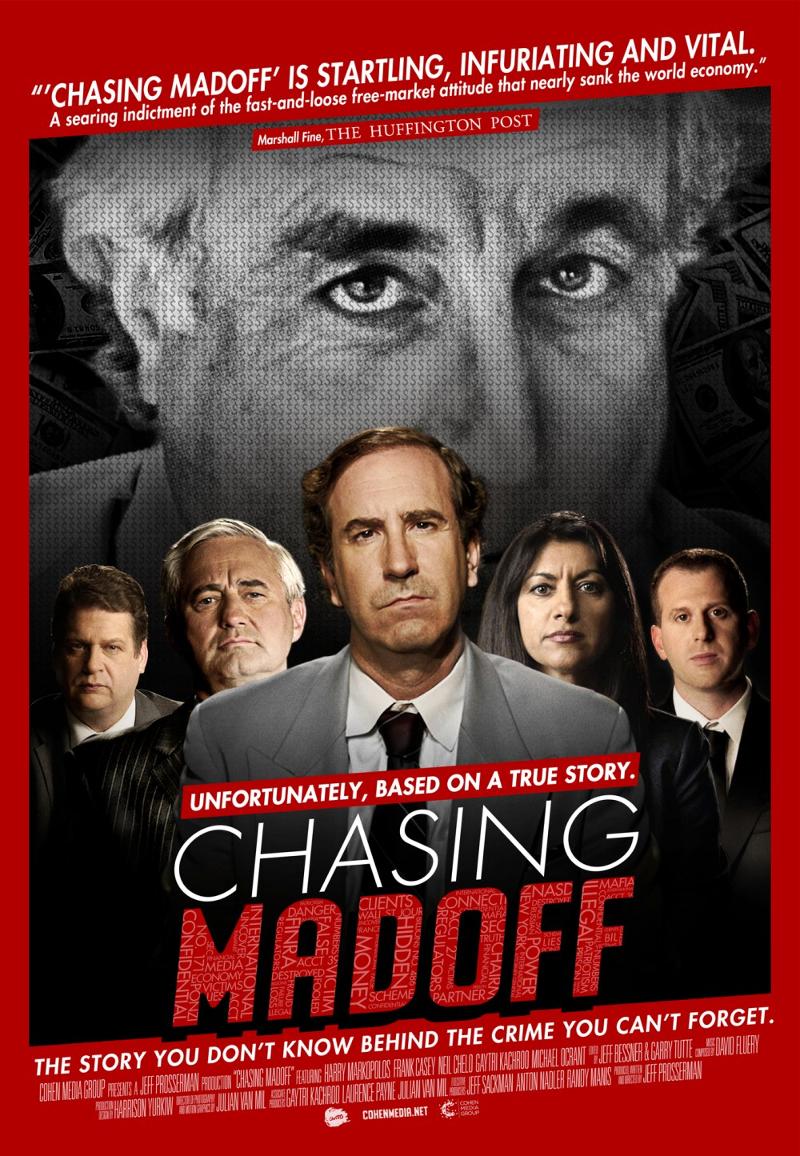
Chasing Madoff

August 03, 2011
By Kachroo Legal Services, P.C.
"KLS is proud to present the Fox Hounds' documentary feature film to be released in the US in late August, 2011. Please check it out at a theatre near you. It is a substantive and educational review of Wall Street, underscoring the profound need for financial reform and ethics in global finance. Dr. Gaytri Kachroo, a member of the Markopolos team, is a subject and co-producer of the film."
Chasing Madoff opened Friday in New York.

Ex-McCarter Lawyer a Key Figure in New Madoff Film
Posted by Brian Baxter
Two years ago Gaytri Kachroo was chair of McCarter & English's international practice. She resigned from the firm in July 2009 as a result of conflicts related to several cases she was pursing on her own probing the $20 billion Ponzi scheme perpartrated by Bernard Madoff.

Now, Kachroo can be seen on film relentlessly pursuing that goal in Chasing Madoff, a documentary about Harry Markopolos and his team, known as the Fox Hounds, and their quest to get someone, anyone, to listen to Markopolos's long-held concerns about Bernard L. Madoff Investment Securities.

Kachroo, who serves as an associate producer on the film, began working with Markopolos in 2005 after the two met at a meeting hosted by the U.S. Chamber of Commerce in Cambridge, Mass. The meeting came around the same time that Markopolos, a former options trader turned financial fraud investigator, wrote a 19-page memo to the SEC titled "The World's Largest Hedge Fund is a Fraud."

Kachroo soon joined the Fox Hound team assembled by Markopolos. Other members of the self-appointed financial truth squad—which collected evidence on the Madoff enterprise and used it to implore the SEC to implement necessary regulatory changes—include research analyst Neil Chelo, hedge fund manager Frank Casey, and former financial journalist Michael Ocrant.

Since joining the Markopolos team, Kachroo has helped prepare the whistle-blower for testimony before Congress, advised the Fox Hound on a report compiled by the SEC inspector general that recommended revisions to the regulator's mandate and the adoption of new whistle-blower protections, and brokered book and movie deals for Markopolos. The book and movie rights were not very lucrative, Markopolos told The New York Times, but brought much-needed attention to the issue of regulatory reform and whistle-blower rights.

In October 2009, Kachroo opened her own firm, Boston-based Kachroo Legal Services, where she employs three attorneys, one of whom is John Ray III, a former senior litigation associate at Ropes & Gray now suing the firm for discrimination.

Kachroo currently represents dozens of Madoff victims in lawsuits seeking compensation for investment losses and also serves as vice chair of a global alliance of 50 law firms representing former Madoff investors. She also represents a group of clients seeking to be reimbursed for investments made with R. Allen Stanford, another former financier alleged to have run a $7 billion Ponzi scheme.

Source: http://sivg.org/article/Chasing_Madoff.html


Visit the Stanford International Victims Group - SIVG official forum http://sivg.org/forum/
Mittwoch, 16. Februar 2011

Cricket mogul Stanford sent to US prison hospital

February 16, 2011
By: AFP
Financier and cricket mogul Allen Stanford was sent to a US prison hospital for drug addiction treatment so he can be fit to stand trial on charges of running a $7 billion fraud, officials said Tuesday.

A federal bureau of prisons website listed Stanford's status as "in transit."

The flamboyant Texan was declared incompetent to stand trial last month after government psychiatrists and Stanford's team testified that he was suffering from bouts of delirium linked to his dependency on powerful anti-anxiety medication.

They found the 60-year-old was also depressed due to a brain injury he sustained during a 2009 jailhouse brawl, and recommended he be weaned off the drug.

US District Judge David Hittner denied Stanford's request to be released and treated at a private medical facility because he is considered a flight risk.

The judge recommended that Stanford be sent to a medical center at a federal prison in Butner, North Carolina, where Wall Street swindler Bernard Madoff is currently serving a 150-year term for defrauding investors of $20 billion.

Stanford has pleaded not guilty to 21 counts of fraud, money laundering and obstruction. He faces up to 375 years in jail if convicted.

A self-described "maverick," Stanford hit international sports headlines by creating the eponymous Stanford Super Series Twenty20 cricket competition.

The $20-million winner-take-all match appalled many in the cricket world by challenging the sacrosanct traditional cricket establishment.

In Antigua, he was a larger-than-life figure, the island's largest employer and the recipient of a 2006 knighthood. But after the allegations against him surfaced, much of his support dwindled and the England and Wales Cricket Board cut ties with him.

Source.

Related article: Allen Stanford beaten up by jail inmates.


Visit the Stanford International Victims Group - SIVG official forum http://sivg.org/forum/